Field notes from a decade inside the new paradigm
I have spent the better part of a decade living and working at the edges of intentional community — regenerative projects, off-grid experiments, co-operative land ventures, new-paradigm collectives across Europe, Mexico, Ireland, and beyond. I have seen a lot of things built with genuine vision. And I have watched a lot of them quietly implode.
The failure pattern is almost always the same. And it almost always surfaces through money.
Not because the people involved are greedy. Most of them are the opposite — idealistic, generous, community-minded. The problem runs deeper than individual character. It runs into the structural design of the container itself, and into a wound that most communities refuse to name directly.
The arguments are about money. But the crisis underneath is always about belonging.
How We Got Here: The Structural Backstory
For most of human history, belonging was structurally guaranteed. Tribal and village-based societies were organized around interdependence — you had a role, you contributed, and your place in the collective was self-evident. Trade and barter kept resources circulating. Money, when it emerged, was a practical convenience: a neutral token to facilitate exchange when direct barter wasn’t possible.
What changed wasn’t money itself. What changed was the erosion of the interdependent structures that gave individual identity its context. As those structures dissolved — through industrialization, urbanization, colonization, the fracturing of extended family and community — money stepped in to fill the gap. It became the primary mechanism through which people signal belonging: which neighborhood, which car, which club, which tax bracket.
The poor, the immigrant, the homeless — these aren’t just economic categories. They are belonging categories. And the deep human fear of falling into them shapes financial behavior at every level, often unconsciously.
Intentional communities form, in large part, as a response to this rupture. People who are done with the extractive model, who want to build something different, who are drawn to interdependence as a conscious value rather than an inherited one. The intention is real. The longing is legitimate.
The problem is that most of them import the wound they’re trying to heal — directly into the container.
What Actually Goes Wrong
In ten years of field observation, I’ve identified two failure archetypes that appear repeatedly, sitting at opposite ends of the same spectrum.
The Overbuilt Vision
More affluent founders arrive with large-scale ambitions — world-saving projects, regenerative land developments, retreat centers designed to transform thousands of lives. The vision is genuine. The energy in the early phase is magnetic. People gather around it.
But the vision is being driven faster than the human system beneath it can sustain. Leaders burn out. The container that was supposed to model coherence starts running on nervous system debt. The project begins to extract from its own people in the same pattern it was designed to replace.
The Collapsed Structure
On the other end: the off-grid commune, philosophically resistant to money and the structures associated with it. No clear economy, no defined contribution agreements, a donation jar gathering dust on the counter. The ideology is anti-capitalist, but the result is a power vacuum. Someone always ends up doing more than their share. Resentment accumulates without a legitimate channel. Parasites — literal and figurative — move in.
I stayed briefly at one such community in Germany last summer. No one greeted me on arrival. I wasn’t shown around until I asked. The shared space hadn’t been properly maintained. Two days in, I was presented with a bill: €35 per night plus €12 for food — for a room I had cleaned and set up myself, from a collective store I’d contributed to restocking.
When I named what felt incoherent about this and offered what I considered a fair contribution, I was met with bureaucratic resistance rather than conversation. No one in a position to resolve it seemed empowered to do so.
A long-standing member — one of the most clear-sighted people there, with a strong background in permaculture and community architecture — told me she’d spent two years trying to bring structure to the place. She’d been asked to pay a significant buy-in fee to formalize her membership. Her response: join into what, exactly?
The question wasn’t cynical. It was diagnostic. You cannot ask someone to invest in a structure that hasn’t been built yet.
The Real Diagnosis: Belonging Without Structure
Most of the conflict inside intentional communities isn’t generated by bad people or bad intentions. It’s generated by limbic activation — the nervous system’s response to unclear belonging.
When the structure of a community doesn’t clearly answer the questions that belonging requires — Who am I here? What is my role? What is expected of me? What can I expect in return? — the nervous system fills the gap with anxiety, and anxiety finds its expression through conflict. The arguments present as being about money: how it’s made, who pays, how it’s allocated. But underneath every one of those arguments is a person whose place in the collective feels uncertain.
This is not a spiritual problem. It is a design problem.
A well-designed community container answers belonging questions structurally, before the emotional charge has a chance to build. It defines contribution clearly. It creates transparent agreements around resources. It builds in a legitimate process for conflict — not as an emergency measure, but as a design feature. It ensures that the economy of the community reflects its values, rather than defaulting to either capitalist extraction or ideological avoidance of the topic altogether.
The communities that sustain themselves — and I have seen these too — are not the ones with the most inspiring vision or the most committed people. They are the ones that did the unglamorous architectural work early. They sat with the hard questions before the land was purchased and the community was formed, not after the first crisis.
What Coherent Design Actually Looks Like
The answer is not in extremes. The hyper-capitalist community that charges market rates for everything and tracks every transaction produces efficiency but no warmth, no true interdependence. The ideologically anti-money commune produces warmth without sustainability. Neither model generates what the people inside them actually came for.
Coherent community design holds the tension between the two. It takes the relational intelligence seriously — the need for belonging, for role, for recognition — and builds economic structures that reflect it. This means:
Clear contribution agreements that distinguish between different kinds of value — labor, skill, care, stewardship, creative output — and honor all of them.
Transparent resource flows, so that money is neither a secret nor a weapon. People who understand where resources come from and where they go are far less likely to project onto the subject.
Defined thresholds for membership. You cannot ask someone to commit before the container is worth committing to. But you also cannot build a container without defining what commitment means. These two things have to be sequenced carefully.
Economic models that are regenerative by design — meaning the community produces more than it consumes, generates genuine yield, and builds reserves rather than running perpetually on goodwill and hustle.
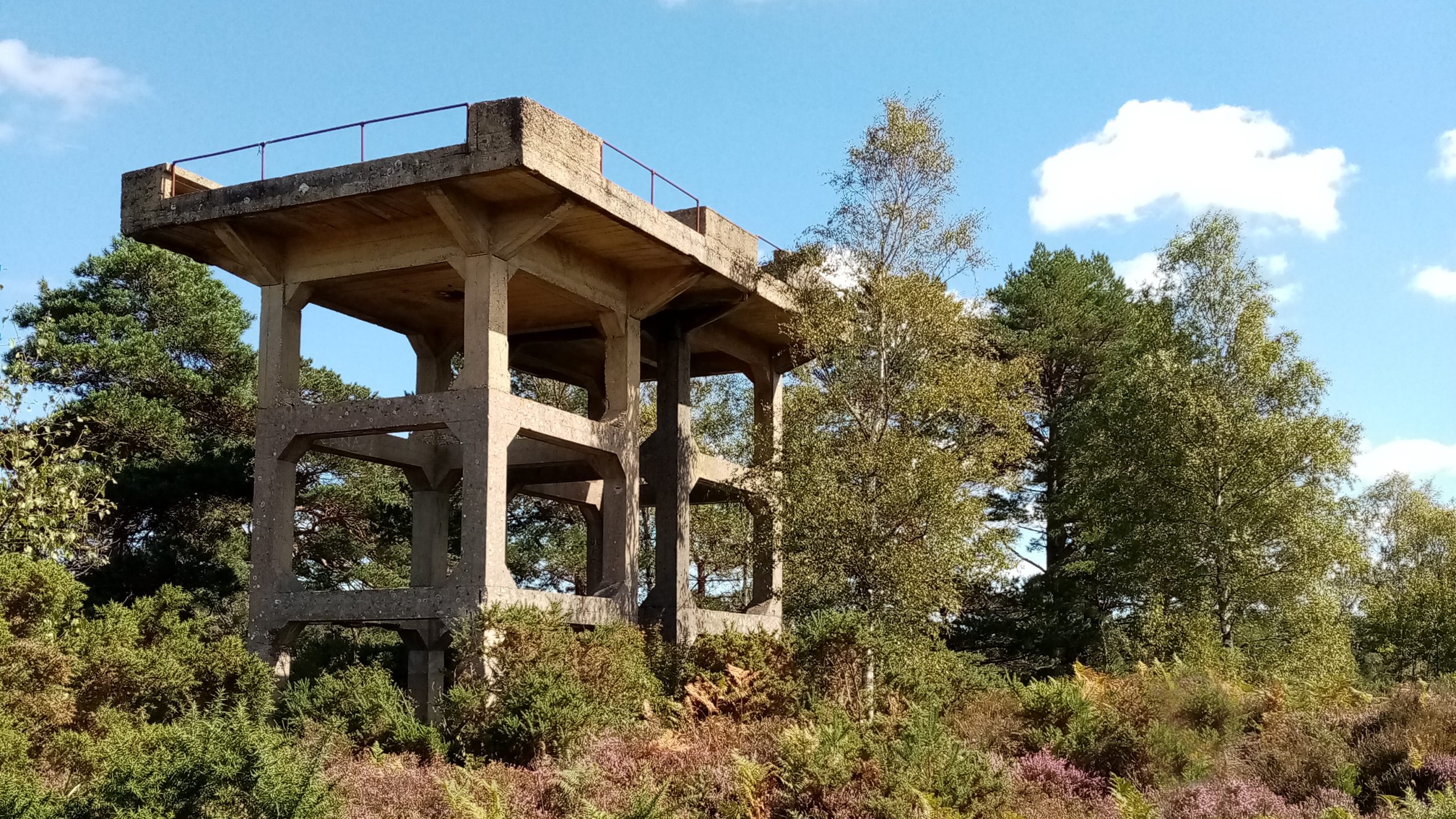
A community’s economy is not a practical detail to sort out later. It is the skeleton of the organism. You cannot build the body before the skeleton is in place.
A Final Note
I left that community in Germany with clarity, not bitterness. What I observed there wasn’t a failure of vision or even of people — it was a failure of architecture. The bones weren’t in place. And without bones, even the most generous organism eventually collapses under its own weight.
The new paradigm that so many builders are reaching toward is not going to be built on inspiration alone. It requires the same rigor, the same precision, the same clear-eyed structural thinking that we would apply to any complex living system.
Nature doesn’t skip steps. Neither should we.
— Mayah